Essential H.I. (Human Intelligence) skills

Lately I’ve been doing a lot of thinking about my passions, my career and my life in general. I’ve been doing some RE-flecting, RE-learning and RE-setting (deep sigh). And my life changing conclusion is that… I still love languages. But I am more intrigued by the learning process in general. What environment works best for learning, what music allows you to zone in on your task and what portion of your brain is activated as you focus on the different aspects of learning such as cognitive and metacognitive techniques?? These are all topics for me to explore in another blog post but for today let’s circle back to Dear Language Lovers!


With the rapid technological changes impacting the language field it is nice to hear the human side of education. Gregory is a Professional Learning Specialist @ TESOL International Association with nearly 20 years of teaching experience. He shared that one of the key components in teaching is “connecting with students, personally exposing them to new experiences and expanding their horizons” (Stancil, September 2025).  He is the latest language enthusiast to participate in the Dear Language Lovers series and below are a few responses that stood out!

When did you fall in love with foreign languages?

I truly fell in love with foreign languages in college. I had studied Spanish in middle and high school, but I was “horrified” to learn that my university required three semesters of a foreign language… I studied relentlessly and by the end of the semester, I not only caught up but became one of her best students—and even her teaching assistant. In reality, it was Professor Calderon’s passion and contagious love for Spanish that inspired me and sparked my own.

When you were teaching, why did you feel it was important to understand your students’ unique needs and learning motivations?

Understanding each student’s unique needs and motivations is the key to reaching them. If you can discover their “why,” you can tailor your approach to connect with them more effectively. Once students see that what they’re learning aligns with their personal goals, teaching and learning become much easier—and far more meaningful.

What strategies or techniques did you use to improve your teaching and training skills?

I wasn’t the type of teacher obsessed with formal strategies or techniques, though I certainly used many along the way. My real strength was seeing potential in my students and giving them opportunities to lead—whether by helping peers, taking on special projects, or expressing themselves in the after-school arts program I ran. That program eventually grew, with my students and me, into a nationally televised youth TV show. I also tried to connect with each student, even those labeled as “troublemakers,” by giving them responsibility and trust. Often, their behavior transformed once they realized I genuinely cared and believed in them. In the end, treating each student as capable went a very long way.

As we continue to incorporate AI in the education field on a larger scale, let’s also be mindful of its limitations and the invaluable role educators play in the classroom.

So, another Language Enthusiast has shared their views on teaching and learning. Be sure to leave your experiences in the comments.

As a language learner and instructor how has your experience as a student shaped the way you conduct your classroom?

Has your experience as a student impacted how you view the classroom environment and student -facilitator interactions?

What role does a student’s personality, learning motivation and learning style play on a student’s ability to process and retain information?

What are the varying layers of language and is it important to explore all of them when studying a language?

Gregory is currently a Professional Learning Specialist @ TESOL International Association.

Want more information?

So, when did you fall in luv w/ foreign languages?

With years of experience in the education field and multiple languages under his belt, our next Dear Language Lover is definitely an asset in the field. He is also a DOS English Language Fellow and longtime language professional. He served as a fellow from 2021 – 2023 in Montenegro which happens to be the same year I started with the program for a university in India. Although we facilitated programs in completely different parts of the world, we both started our journey at the same time with the hopes of providing well developed teacher training. The ELF program offers a notable opportunity for professionals to enhance their teacher training, curriculum development and leadership skills in various universities throughout the world. It’s a unique program which fosters professional growth and exposes individuals to a multitude of cultures and countries. In addition, the learners are able to enhance their English skills and prepare for different stages in their educational or professional journey. So, without further ado let’s take a deep dive into the responses from our newest DLL contributor. 

I was quite curious to learn a bit more about when he became intrigued by languages and what he found most fascinating about the education field as a whole. Hansley shared that his interests in foreign languages peaked while he was completing his master’s in multilingual education. It was during this time that he was introduced to sociolinguistics and the interwoven paths between history, language and culture. While studying Japanese and experiencing the acquisition process he began to truly notice the minute nuances of language and the role of language in one’s thought process. “ Yeah, during my grad studies, I fell in love with foreign languages” (Cazeau, May 2025). For Hansley the journey of learner understanding that both the instructor and learners embrace is both fascinating and rewarding. Although each participant will have a different experience this is where the teacher has the opportunity to pull out all their creative tricks and tools. He compares this part of the classroom dynamic to a comedy show.

Have you ever watched a comedy show and you are telling your friends about it. You try to tell them the joke, but for Some reason, it’s not as funny as when the comedian said it? That’s because comedians are experts in delivering jokes. They know how to lead an audience in, giving you bits of information in the beginning so you can appreciate the punchline at the end. Facilitating that journey to a good laugh. That’s education to me. In what way can I facilitate this journey to Understanding. That’s where teachers get creative, and that is what I find the most Interesting (Cazeau, May 2025).

Hansley has studied Japanese more formally but due to his Haitian background he also is familiar with Haitian Creole and is interested in studying French in the future. As a language enthusiast he feels one of the biggest challenges that instructors face in the classroom is also an opportunity for creativity! He circled back to his analogy between comedians and teachers and their ability to share information in a manner that connects with their unique audience. In order to do this one must be cognizant enough of how an individual prefers to intake information and willing to make adjustments to how they present their material. As Hansley stated, “that requires a growth mindset and a practice of being a reflective educator” (Cazeau, May 2025).

So, another Language Enthusiast has shared their views on teaching and learning. Leave your experiences in the comments.

As a language learner and instructor how has your experience as a student shaped the way you conduct your classroom?

Has your experience as a student impacted how you view the classroom environment and student -facilitator interactions?

What role does a student’s personality, learning motivation and learning style play on a student’s ability to process and retain information?

What are the varying layers of language and is it important to explore all of them when studying a language?

Hansley is currently a Multilingual Specialist at the DoD Education Activity. 

Want more information?

I suppose I was always intrigued…

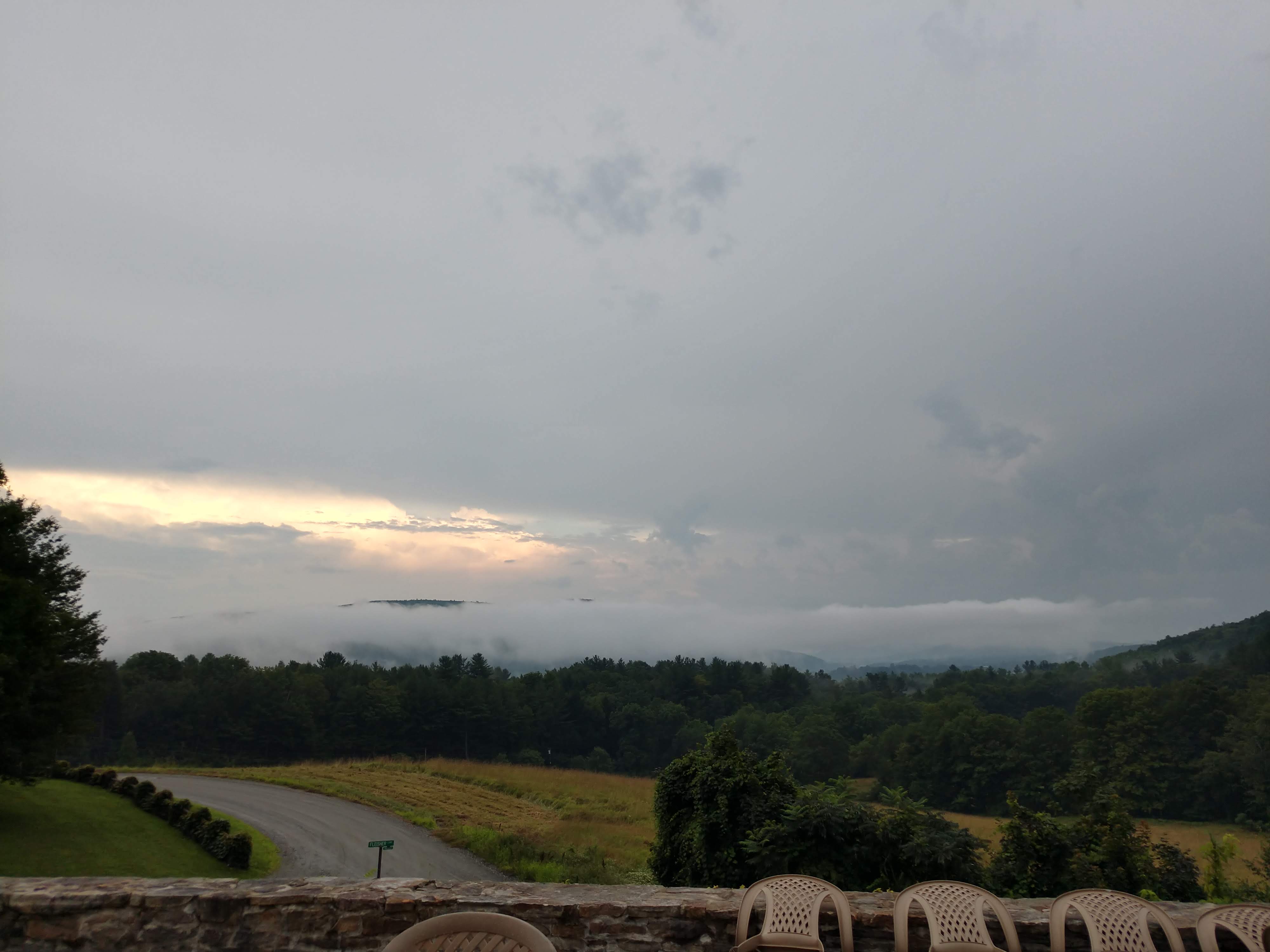
My dear grad school colleague agreed to take part in my series Dear Language Lovers so let’s take a look at his responses to my questions. What are his ideas, thoughts and views about language learning, teaching and appealing to a wide range of learners. We both attended the School for International Training which was such a unique and intimate experience. The program centered around teaching from a truly student-centered approach with experiential pedagogy at the forefront. After attending the classes in Vermont and forming bonds with my instructors and peers I not only had a greater understanding of how to teach the student as an individual and not simply a student in the classroom, but I also had a greater understanding of the notion of giving and receiving constructive feedback. I had a greater sense of confidence in my ability to facilitate a class and speak publicly in group settings.  Finally, I was exposed to so many experiences and people which were outside of my comfort zone which ultimately led to personal growth and a newfound love for everything outdoors.

So, let’s climb the infamous mountain to SIT and see what M from Turkey has to share as the next Language Enthusiast.

1. When did you fall in love with languages? What languages have you studied and what languages would you like to study?

In some sense I suppose I have always been intrigued by languages and loved them since I grew up bilingual (English / Sranan Tongo). But then I took ancient (koine) Greek and linguistics at university, and they were the hardest parts of my program. I studied for a year in Turkey after university and failed Turkish twice at the elementary level. (!) So, languages weren’t really fun, and I didn’t notice that they could be enjoyable. But it only took a few weeks of teaching English to know that I’d found something I loved to do. [Eventually this] (with renewed and more focused study of Turkish) led to a conscious love of languages (Champlin, April 2025).

2. What is it about teaching that you find most intriguing?

It seems to me that languages are windows into people and cultures, and I’d found out that those are central things I love. So, language, the negotiation of meaning and the joint exploration of self and others that happen in the process became increasingly important to me. I also learned that loving to teach a language and being good at it were too different things, which led to more study. That study in turn increased my understanding and fascination with the languages – a beautiful cycle (Champlin, April 2025).

3. Why do you feel it is important to understand your students’ unique needs and learning motivations?

The TESOL word ‘affordances’ springs to mind – opportunities! If language instruction is going to be minimally coercive and maximally beneficial, it needs to hear the students’ desires and interests. As a teacher, I bring a set of opportunities that the student may not even be aware of; but the opportunities I offer a learner will be most effective and enjoyable if they align with the students’ goals. Since that may not always be possible, minimally having rapport with the students so that we each know that we care about the others’ motivations even when we can’t meet them is important (Champlin, April 2025).

4. What do you find most challenging about teaching English?

Short-term, the challenge of re-thinking significant parts of my style due to AI probably looms the largest. There are many opportunities for improvement, but it also involves a significant amount of trial and error. Long-term, the challenge of drawing in the unwilling student seems to be the most consistent. How do I best help the student who is in the class and continually wishes they weren’t? This question feels vital at both the practical and philosophical level (Champlin, April 2025).

So, another Language Enthusiast has shared their views on teaching and learning. Leave your experiences in the comments.

As a language learner and instructor how has your experience as a student shaped the way you conduct your classroom?

Has your experience as a student impacted how you view the classroom environment and student -facilitator interactions?

What role does a student’s personality, learning motivation and learning style play on a student’s ability to process and retain information?

What are the varying layers of language and is it important to explore all of them when studying a language?

Matt is currently an instructor at the Istanbul 29 Mayis Universitesi

Want more information?